Coherent Search
Cleared the north star for Xbox search — one intent-aware system that product cycles now build toward, from catalog and people to Copilot when you don't know what to look for.
- Role
- Product designer
- North star
- Cleared
- Influence
- Product cycles
Overview
Search is where high-intent players convert — play, purchase, or help — and it has to work as a horizontal across Home, Store, and Game Pass. Across Xbox it had drifted into different products.
I led the north star that got cleared: one intent-aware search system, with Copilot as guidance, that every surface can build toward. That proposal is now the destination for product cycles — PC first, then mobile and web — so finding a game, a person, or a next step feels like one Xbox.
Problem & opportunity
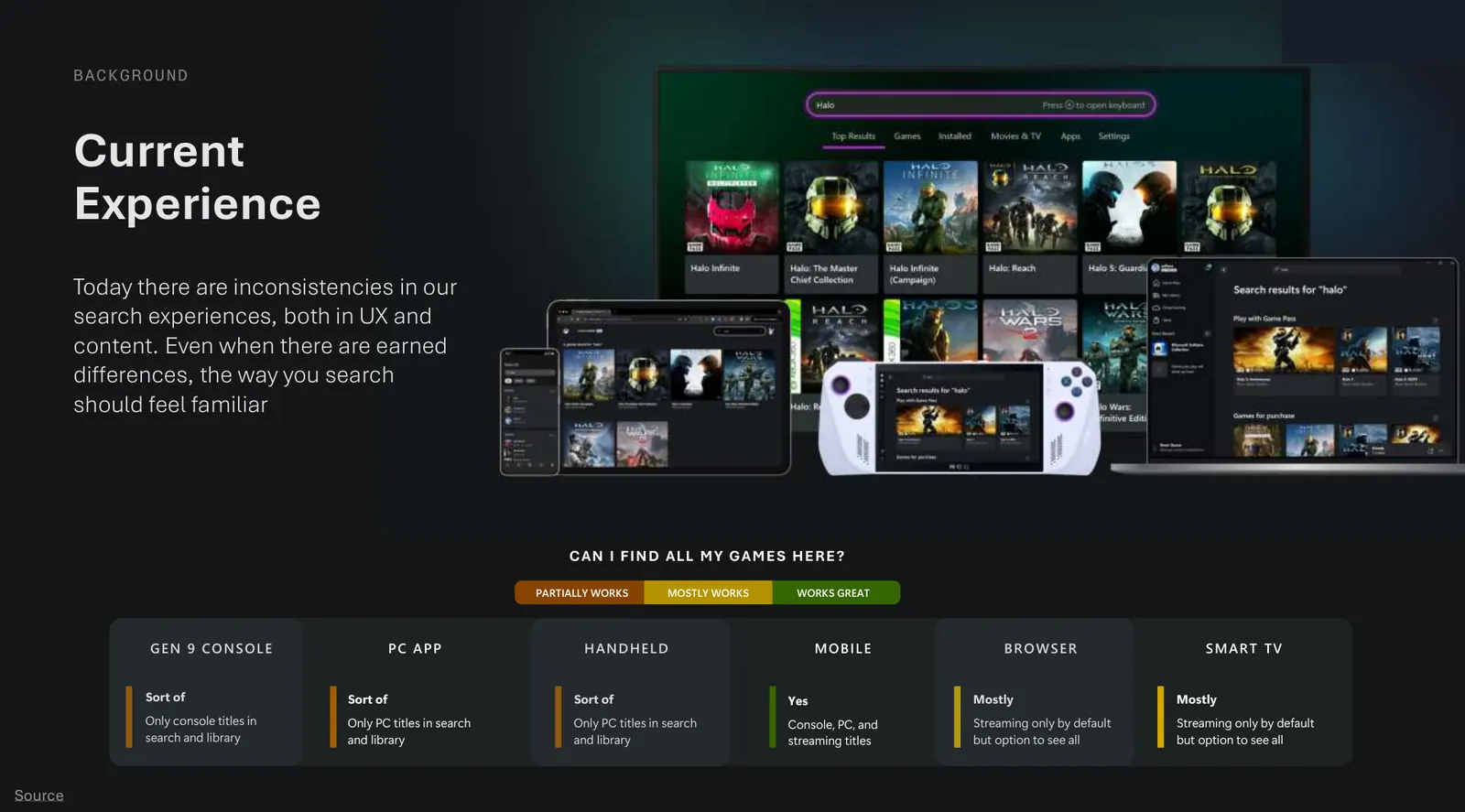
Xbox search still doesn't feel like one product. Catalogs, result types, and empty states differ by surface — console, PC, mobile, web, TV, and handheld each answer "can I find this here?" a little differently. Even earned differences should sit on a familiar model.
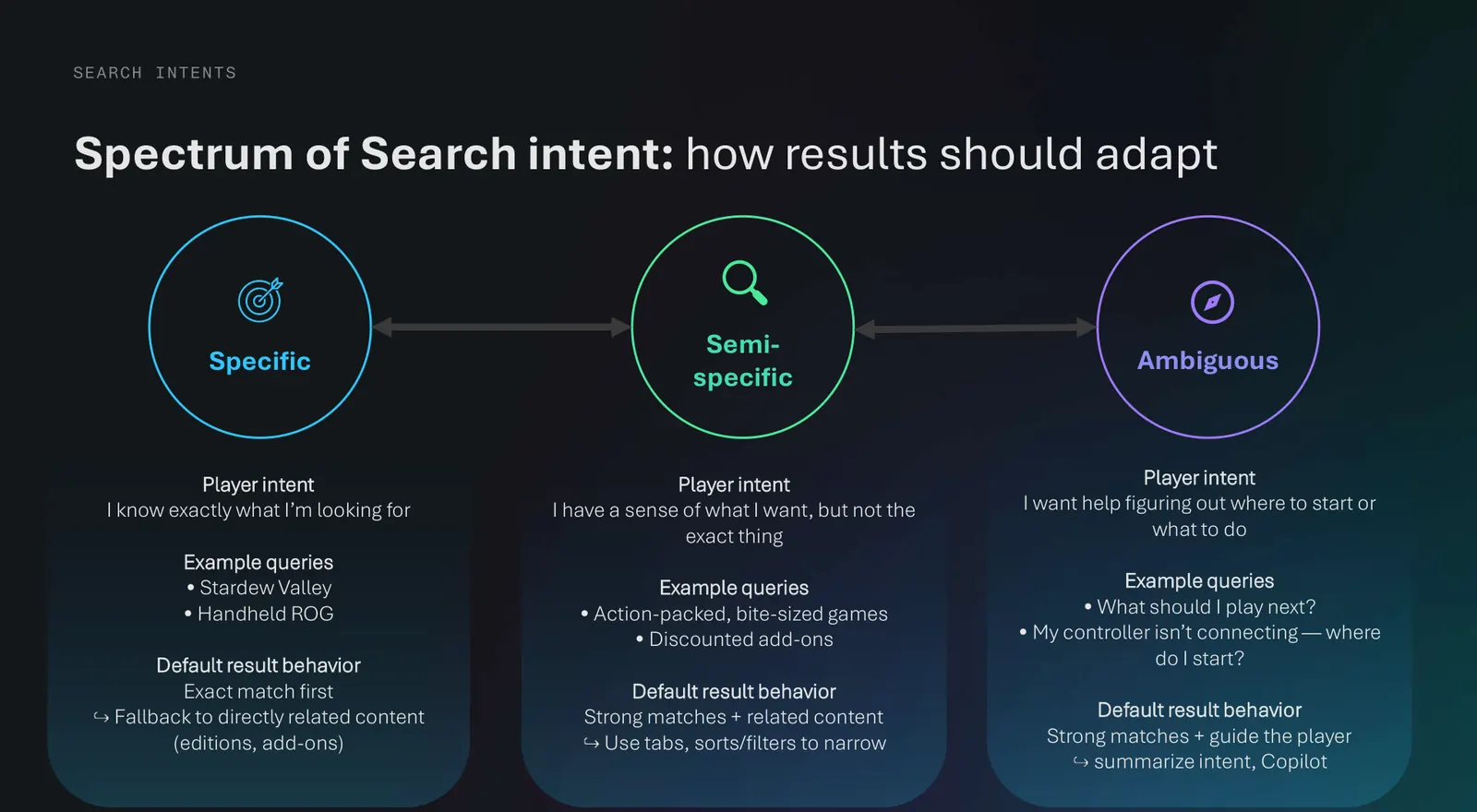
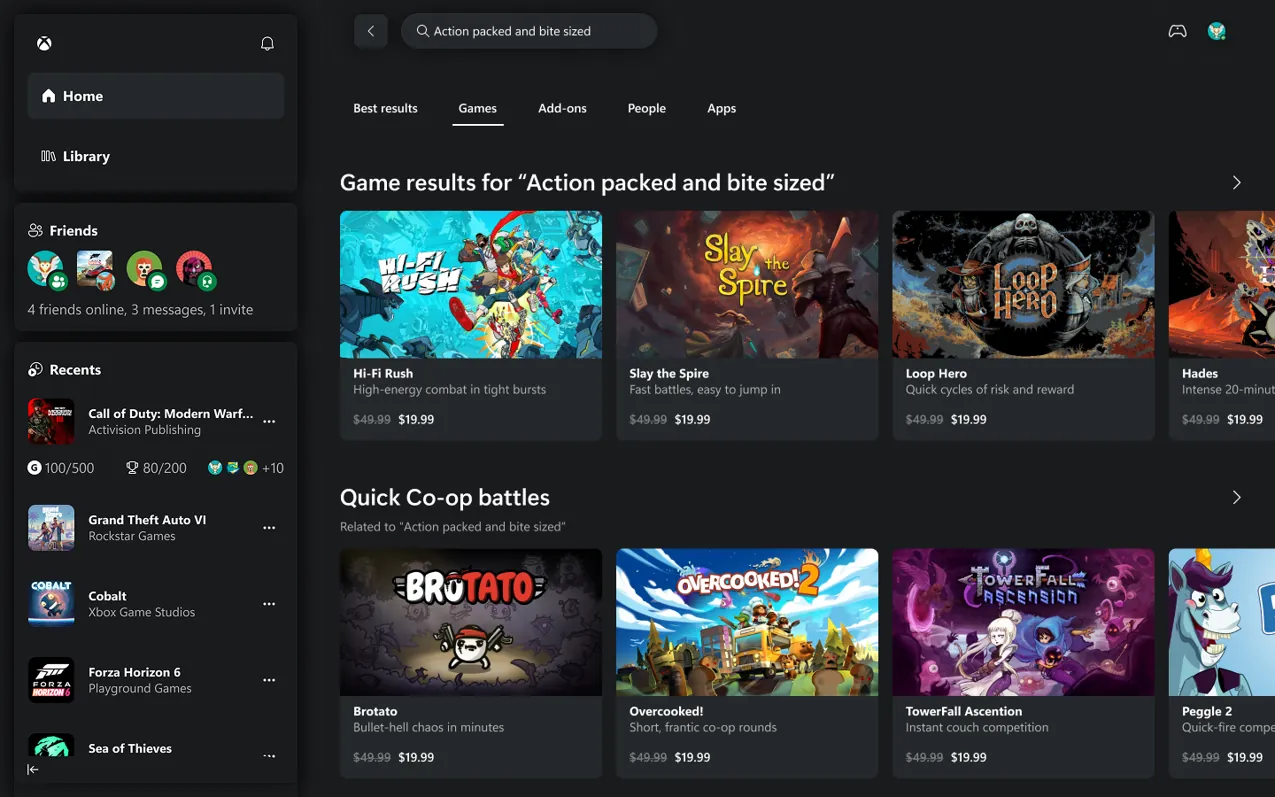
Players aren't only looking up a known title. Intent sits on a spectrum: specific ("Stardew Valley"), semi-specific ("action-packed, bite-sized games"), and ambiguous ("what should I play next?" / "my controller isn't connecting"). Results should adapt — exact match first, strong matches plus filters, or guidance when they need help starting.
Research made the gaps concrete. 52% of Xbox.com users called filters "very important." On console, 22% of UX complaints asked for relevance tools, and searching for content that wasn't available was the top reason for dissatisfaction (55%). Games and add-ons dominate queries. Search is a top destination in the PC app — but only 18% of PC players said they use the search bar to find a game, while most pick from channels like Play with Game Pass.
Approach
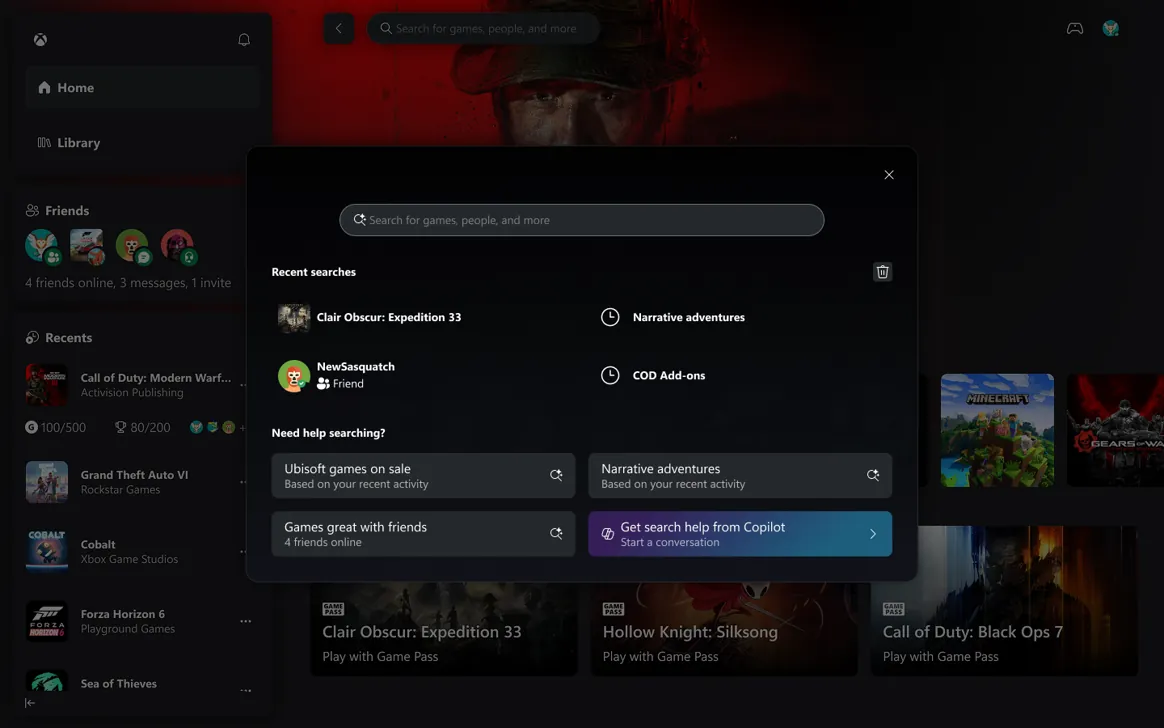
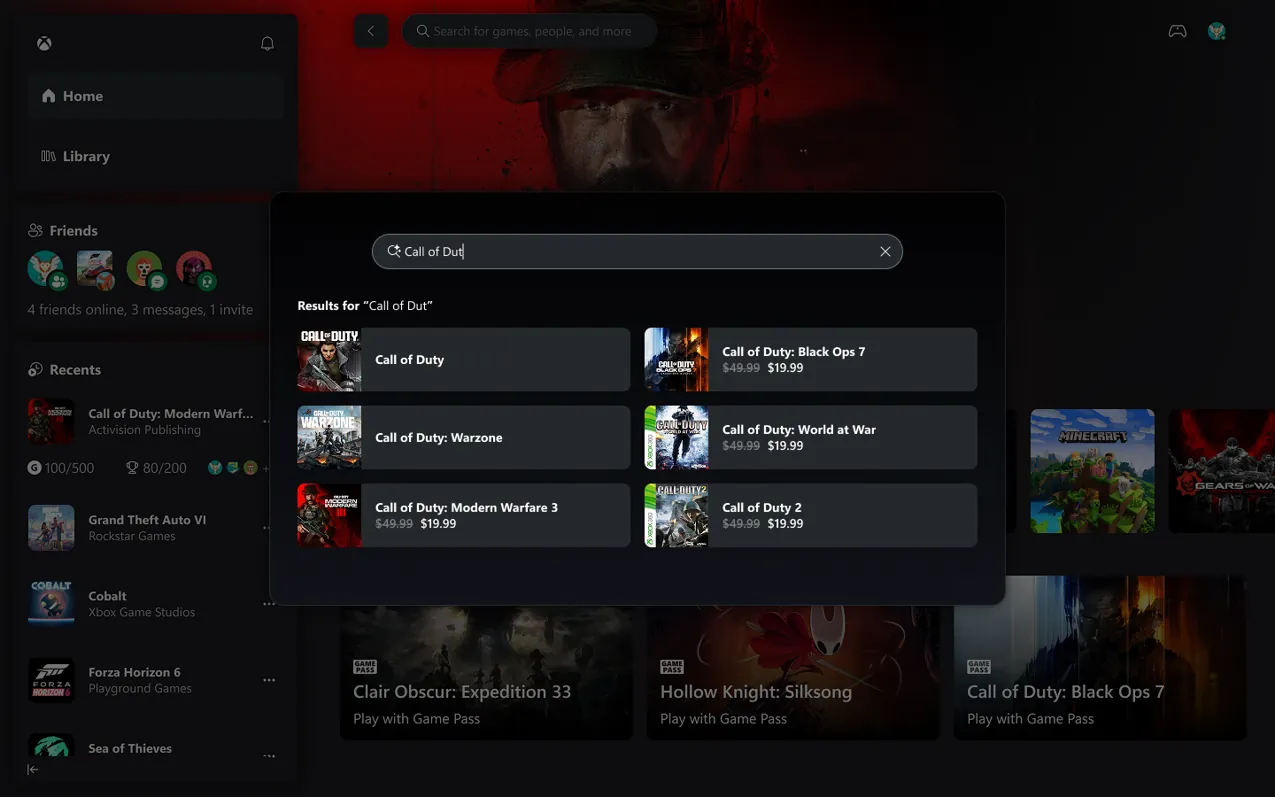
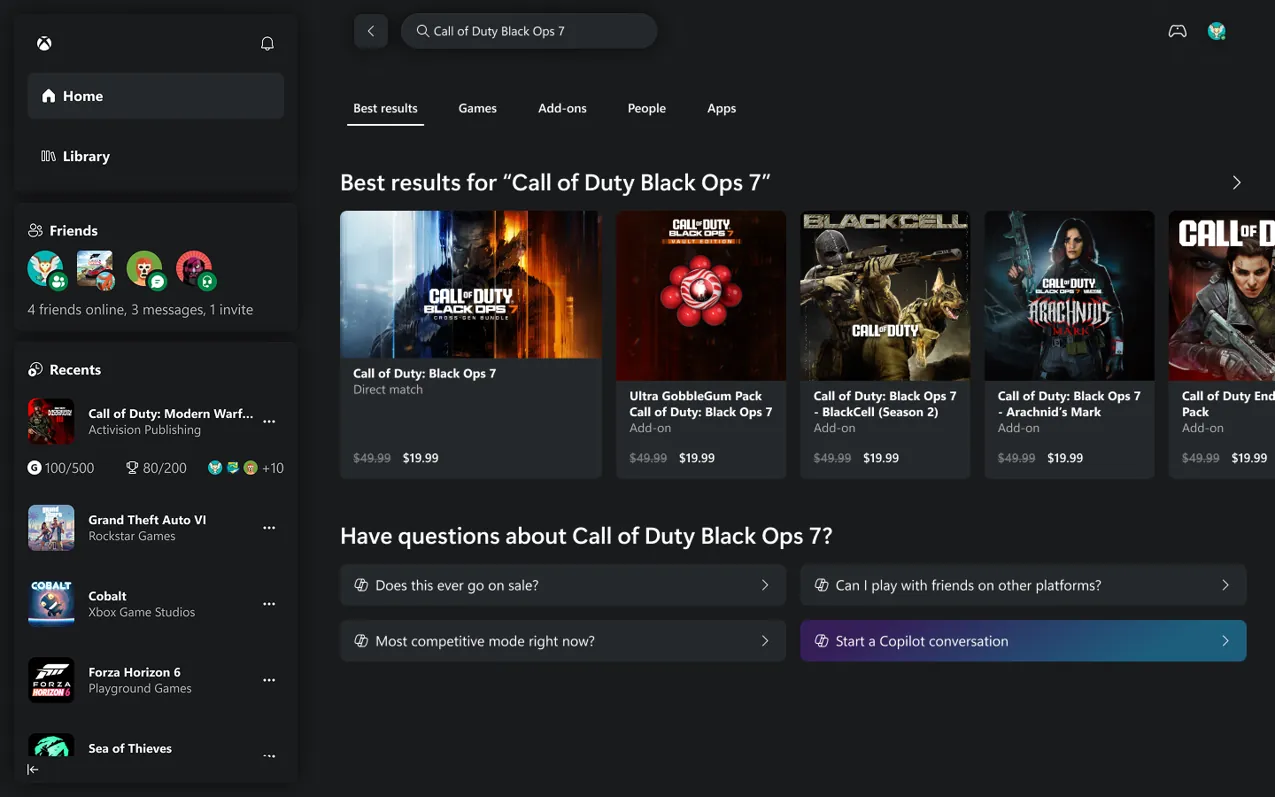
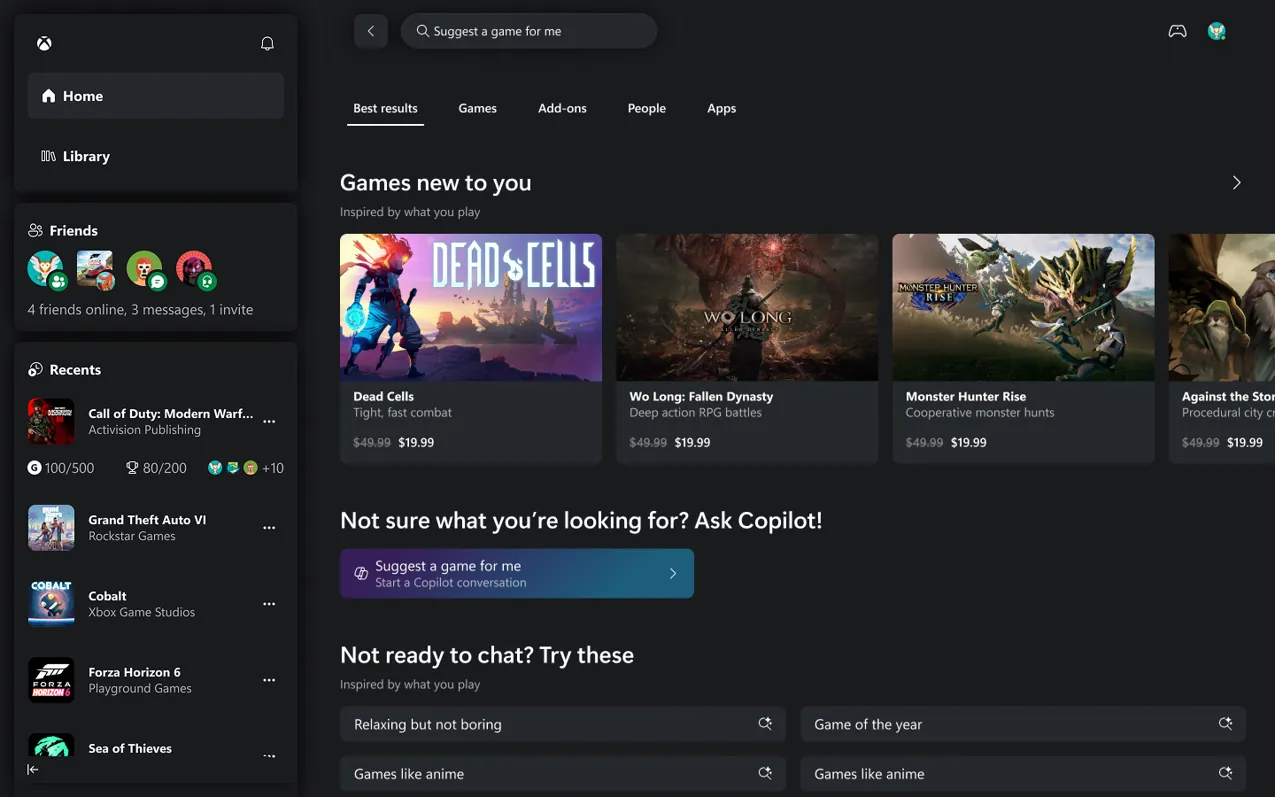
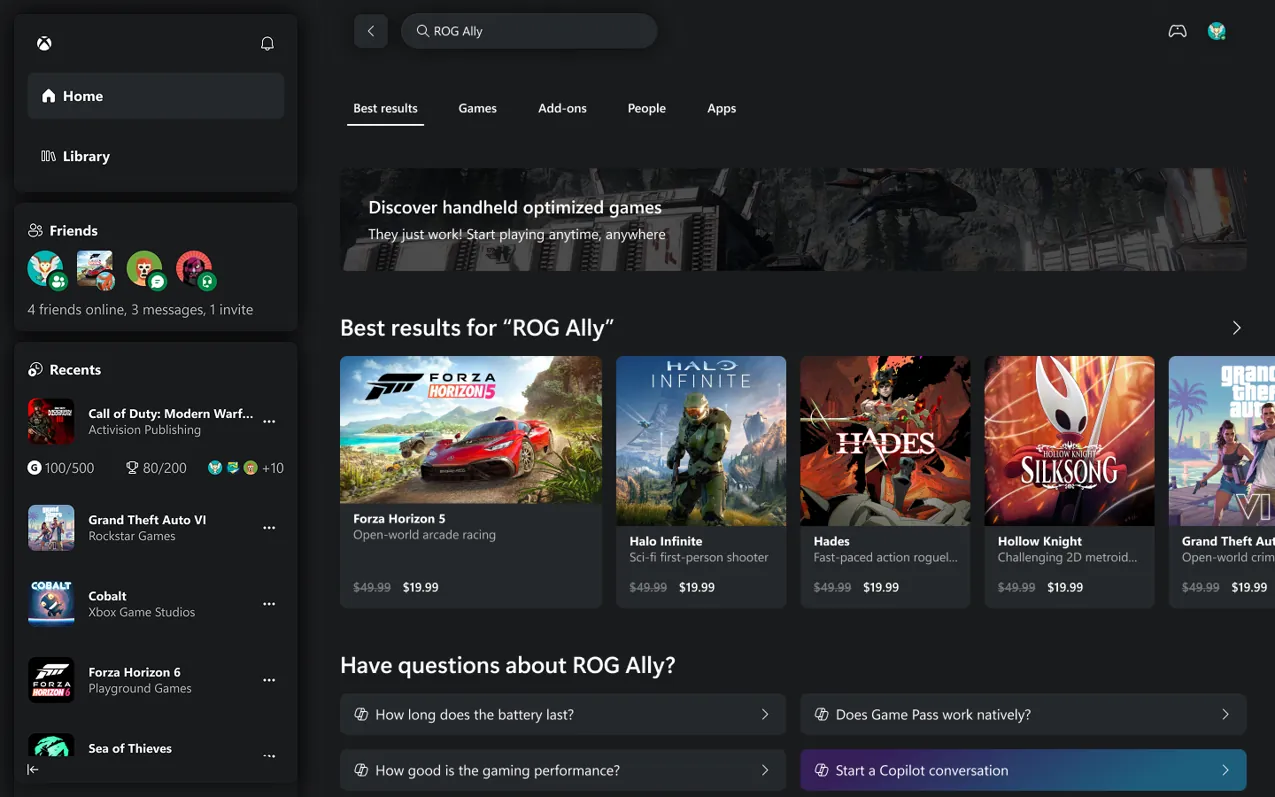
Four phases, one model: how you invoke search, a zero state with recents and suggested queries, typing with typo-tolerant autosuggest, and full results. Best Results blends the strongest games, add-ons, editions, people, and related content; tabs and filters let players narrow without leaving the flow.
Specific queries lead with a larger first card so the answer is obvious, then open into franchise exploration. Semi-specific language ("action packed and bite sized") uses semantic ranking, short gameplay descriptors, nearby queries, and a gallery with complementary filters — play mode, access, genre — instead of repeating the intent they already typed.
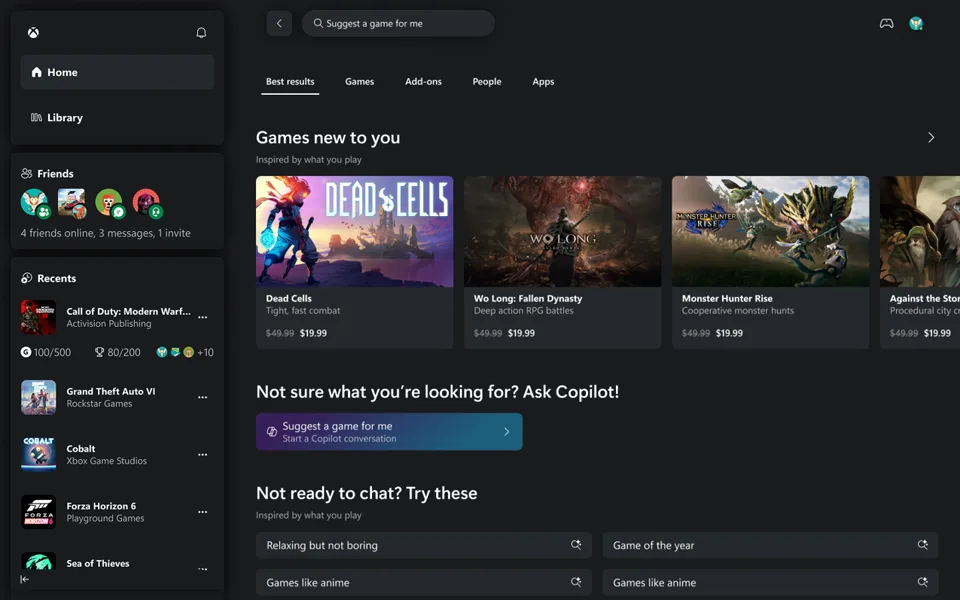
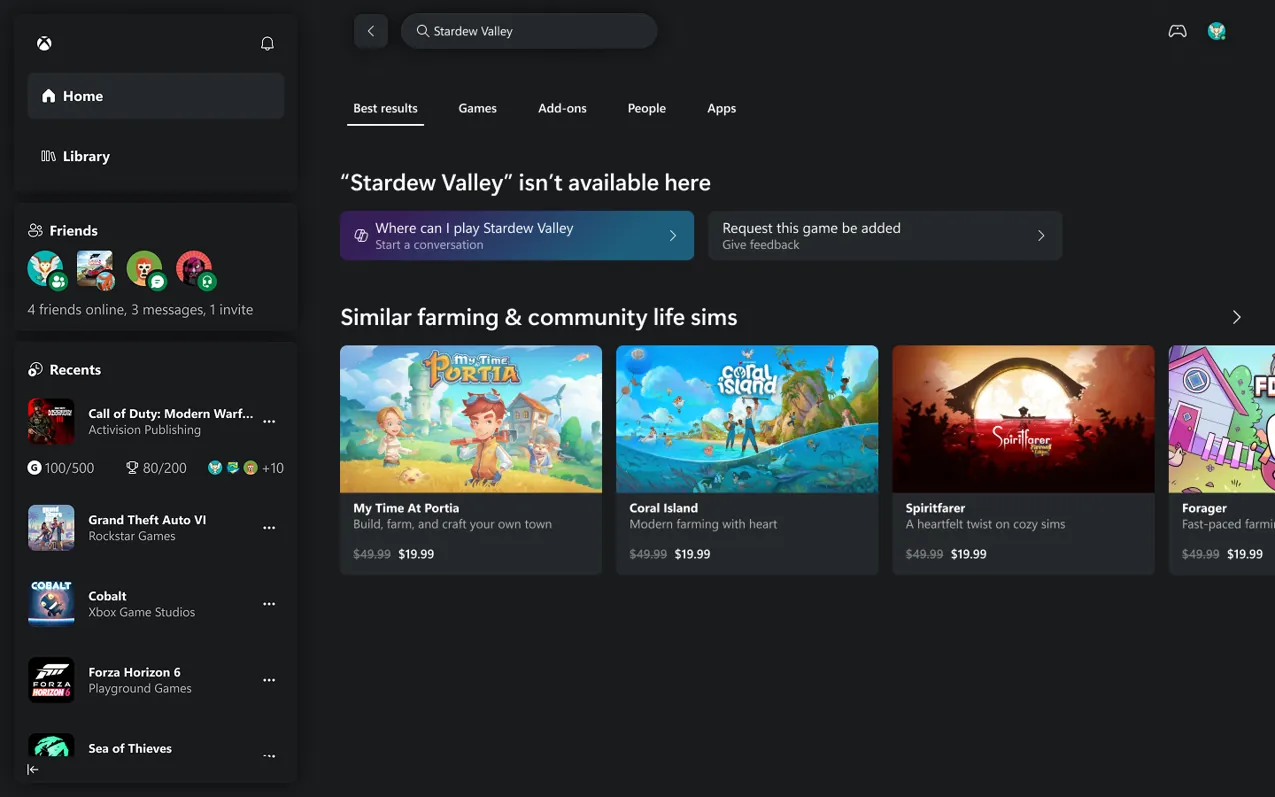
No dead ends: if a title isn't available, say so, offer a request path, and show similar games in the catalog. When someone isn't ready to type, "Games new to you," Copilot ("Suggest a game for me"), and chips like "Relaxing but not boring" give them a way in.
Copilot sits beside search, not on top of it. Search stays the source of truth. AI only comes in when it clarifies ambiguous intent, summarizes, or offers a next step — clearly labeled, and grounded in what's actually in the catalog.
Impact
The north star cleared. Leadership signed off on one search system — Best Results, tabs and filters, no dead ends, Copilot as guidance with search as the source of truth — instead of each endpoint inventing its own.
That decision is what product cycles are now executing: a PC-first MVP, then mobile and web, with console planning after. Teams share one model for specific, semi-specific, and ambiguous intent, and one way to measure health, engagement, and conversion once services are unified.
Search is no longer a local feature. It's the discovery engine the rest of Xbox plans against — fast, comprehensive, and intent-aware — with Copilot in a place that doesn't make results untrustworthy.