Coherent Profile
Cleared the north star for Xbox profile — identity that stays recognizable across surfaces, and the activation and personalization work product cycles now plan against.
- Role
- Product designer
- North star
- Cleared
- Survey
- 37,821 players
Overview
Make Xbox the best place to play with the people you want, anywhere you want. Profile is the first place people learn about you — and it had grown up separately on every endpoint.
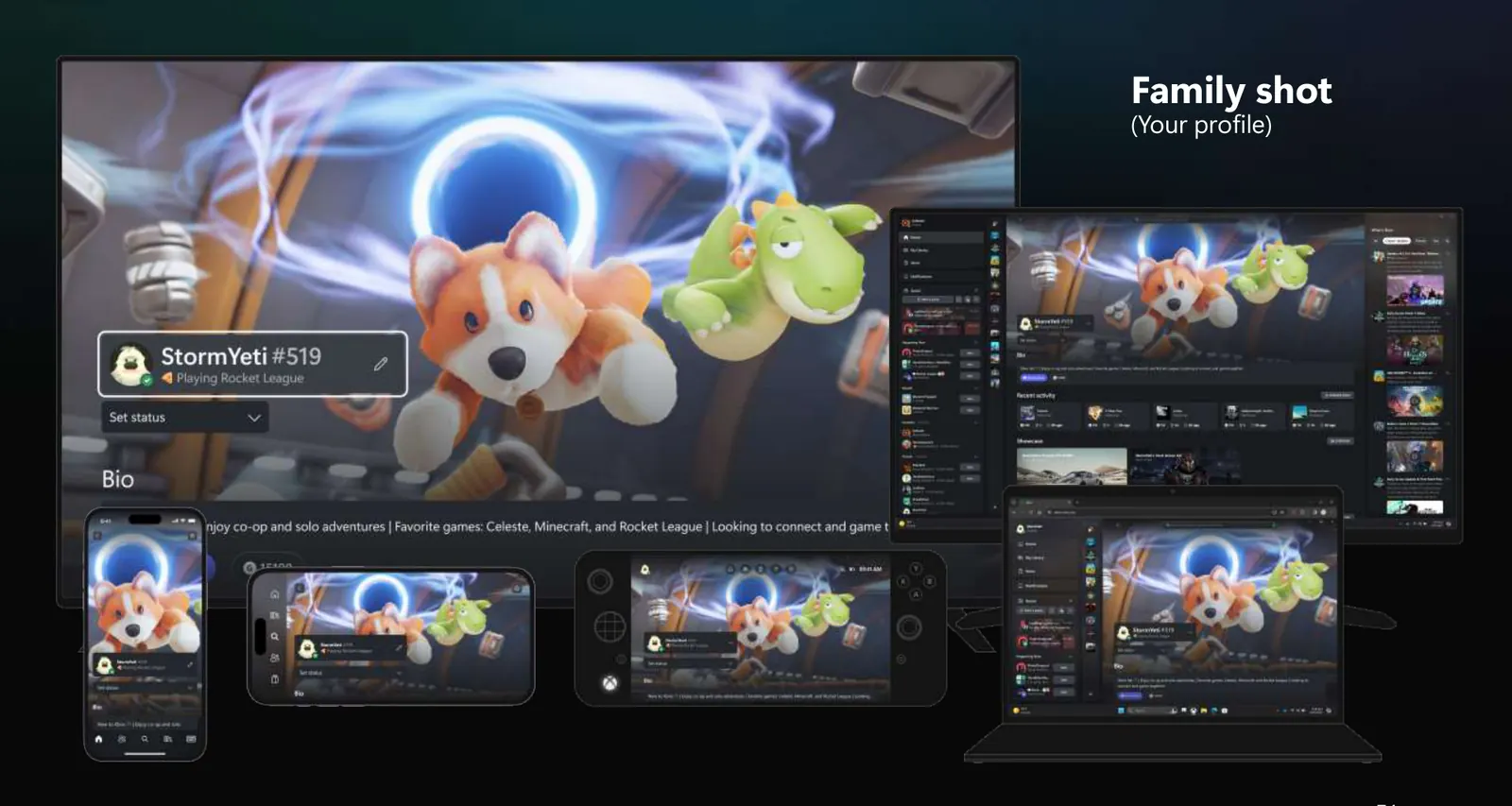
I led the north star that got cleared: one identity system, from first-theme activation to viewer-personalized profiles, that product cycles now execute against. Connect, communicate, invite, discover, and express sit on the same model — so the same person doesn't feel like a different player depending on where you open Xbox.
Research & opportunity
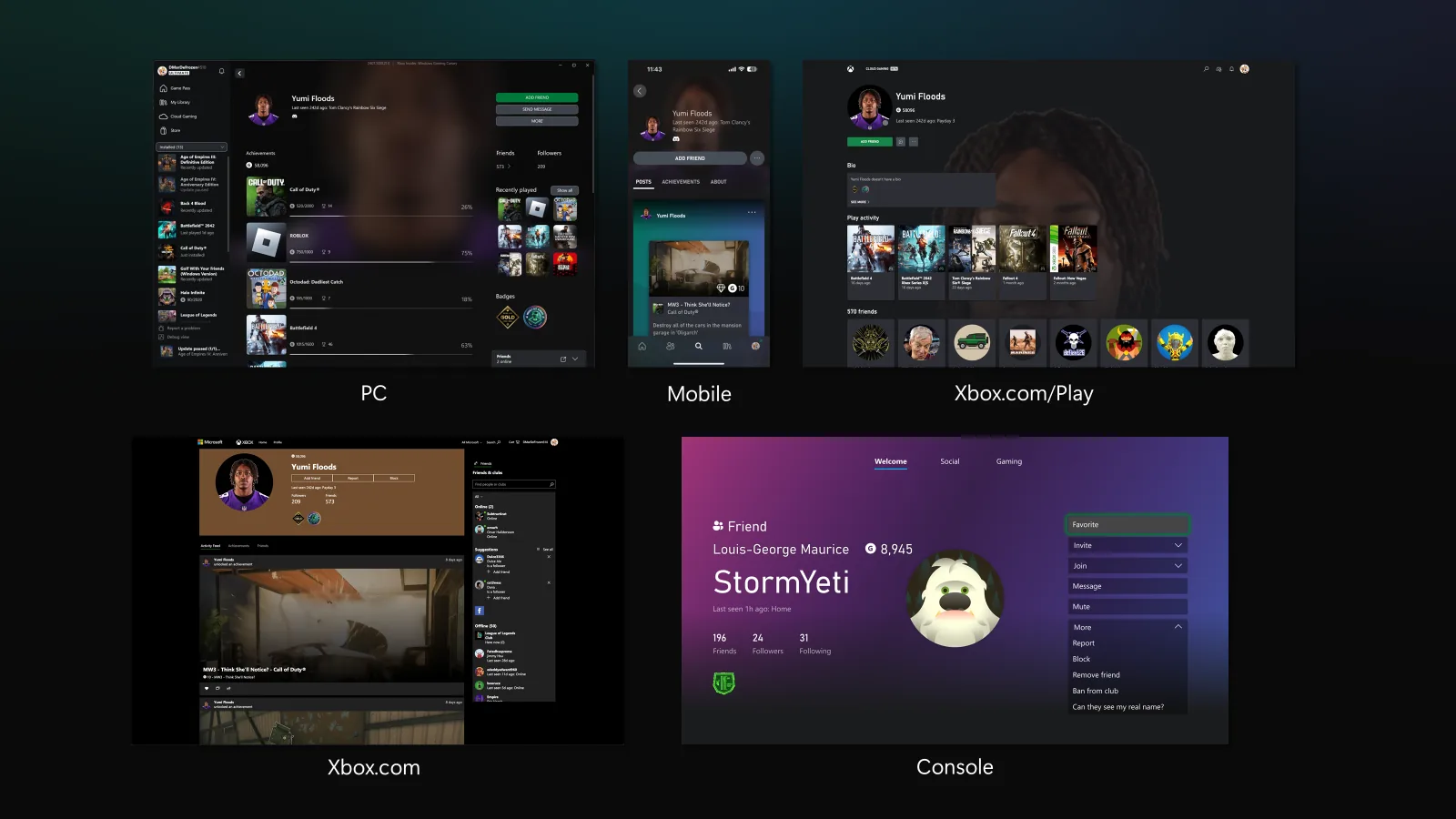
Profile had grown up separately on each endpoint. The same person could feel like a slightly different player depending on where you opened Xbox — and new players still couldn't find a clear way in.
A worldwide personalization survey (37,821 players) set the bar: 79% said personalization is important to gaming identity, and 81% expect it to be the same across devices. Friend-add decisions turn on mutual friends, recently played together, and recent games. Viewers want profiles personalized to them, around shared interest. What people want to showcase: games they play, online/offline status, and captures. And they want one place to set who can see which parts of their profile.
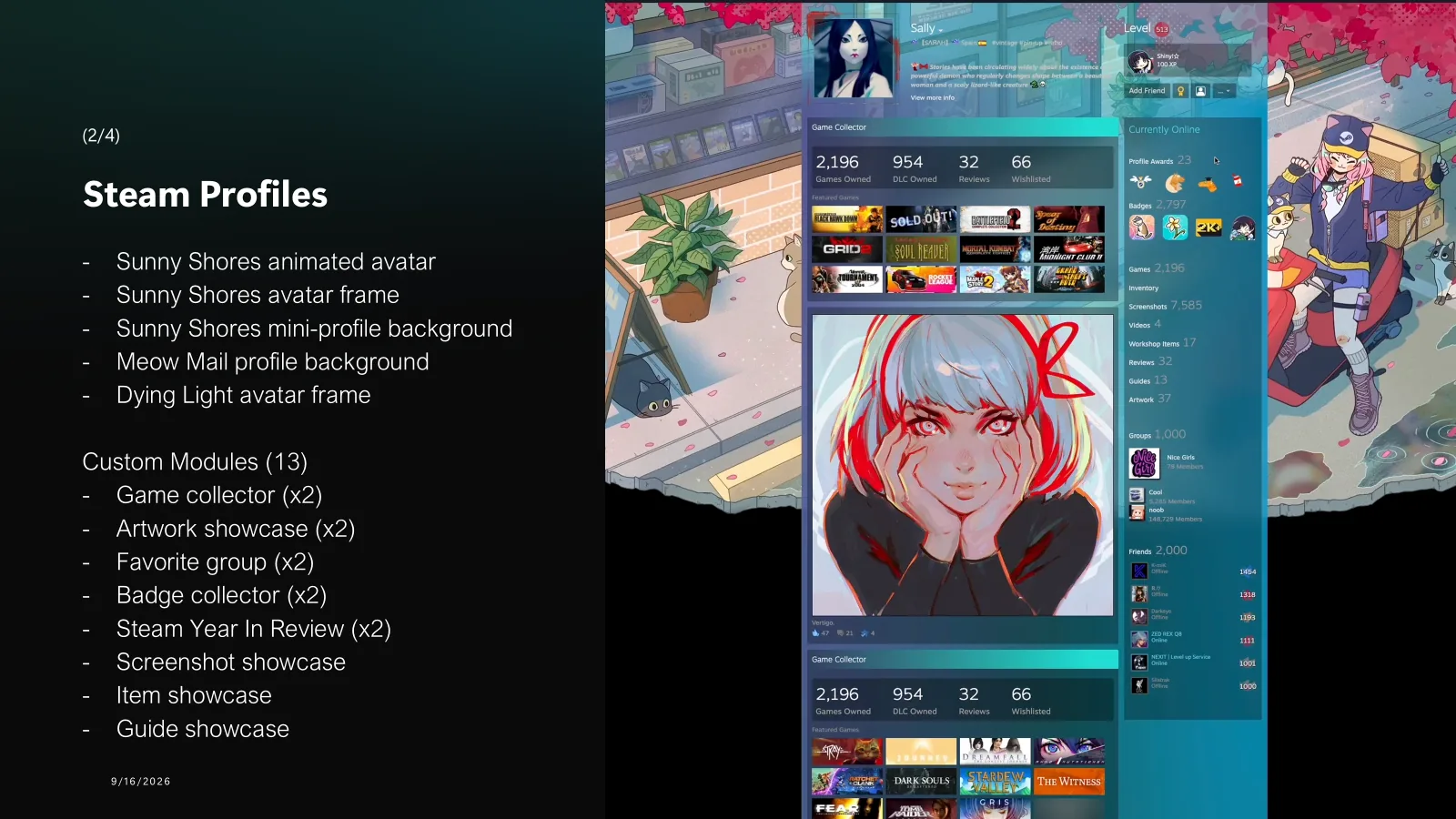
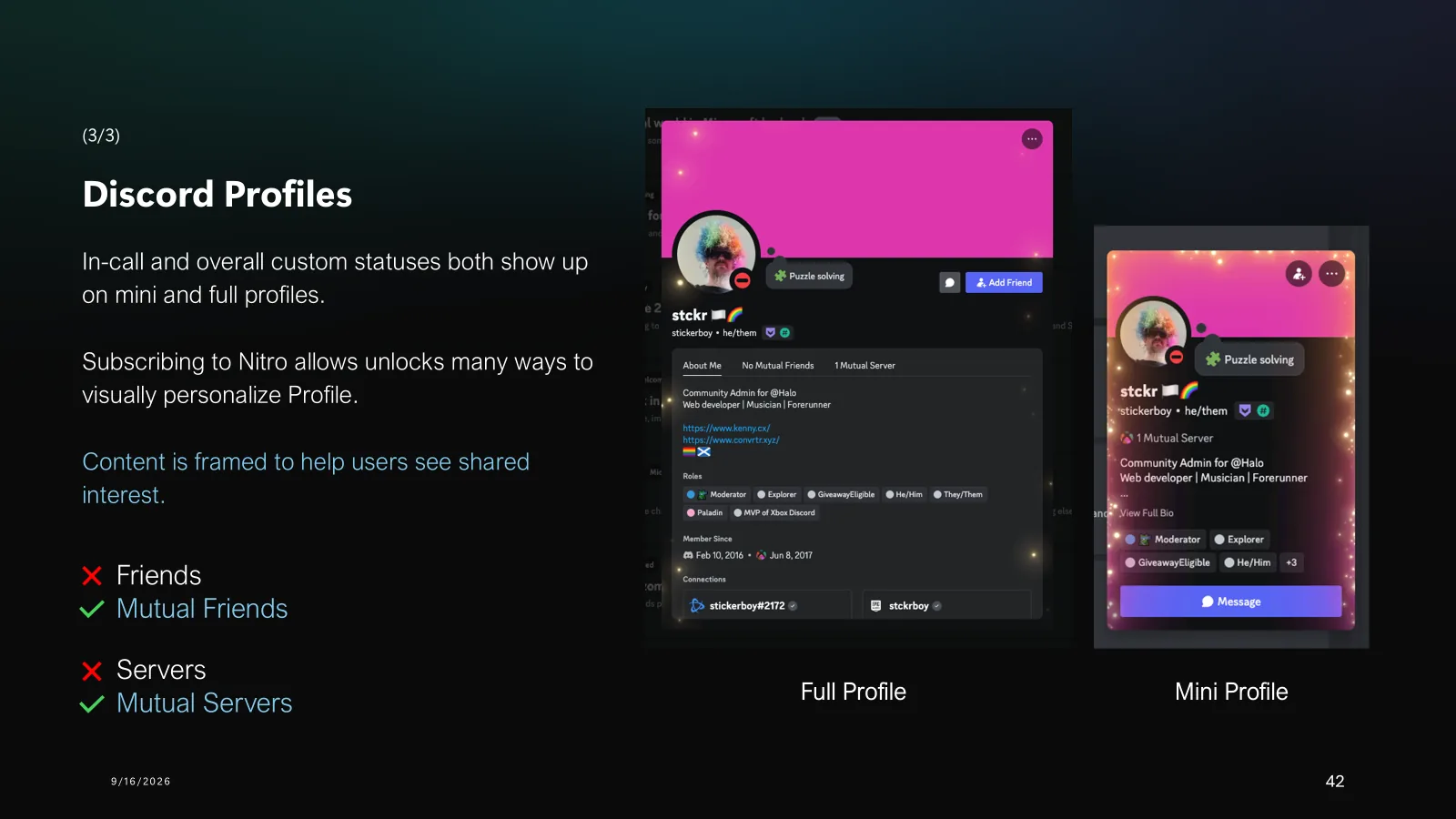
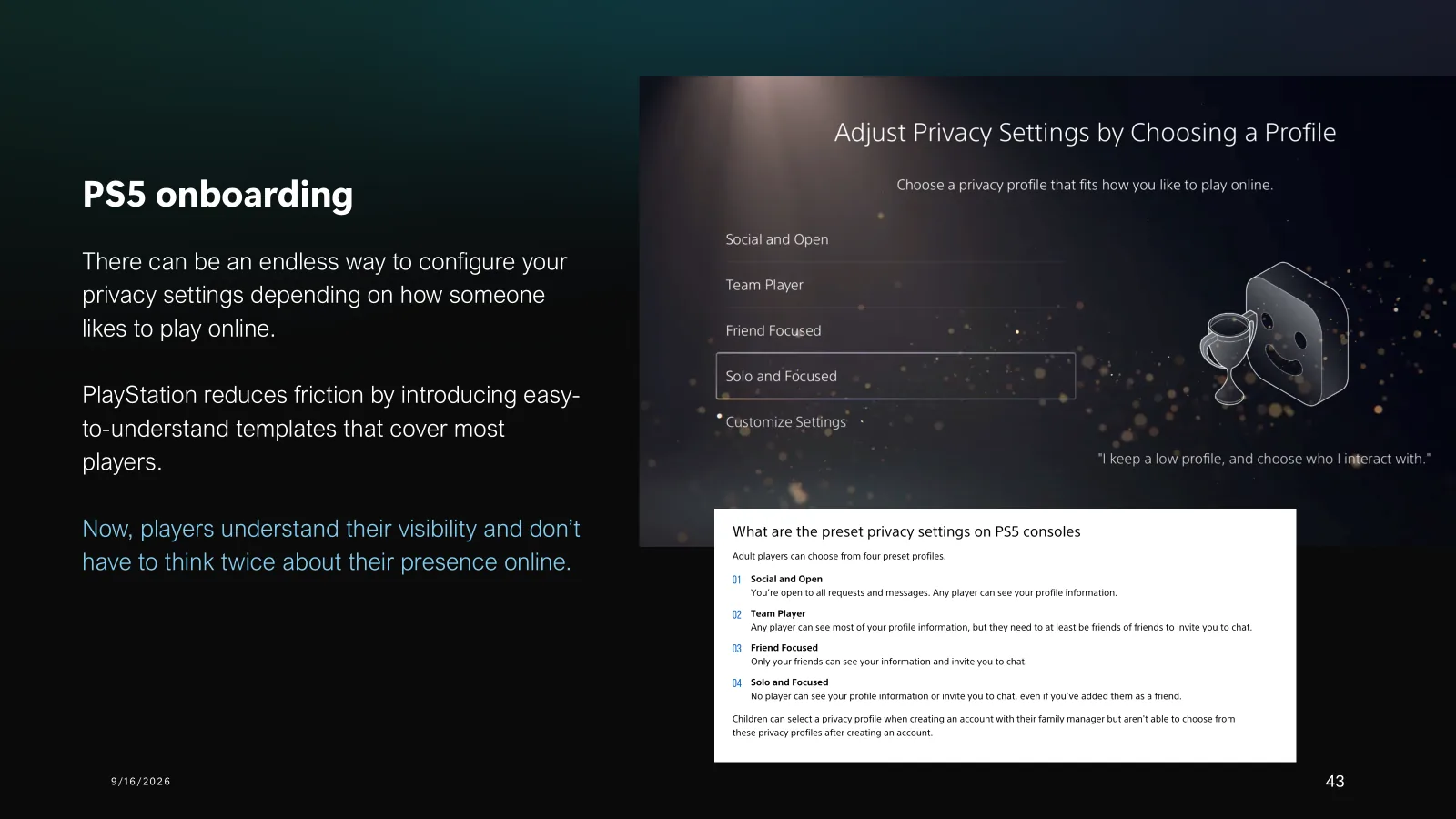
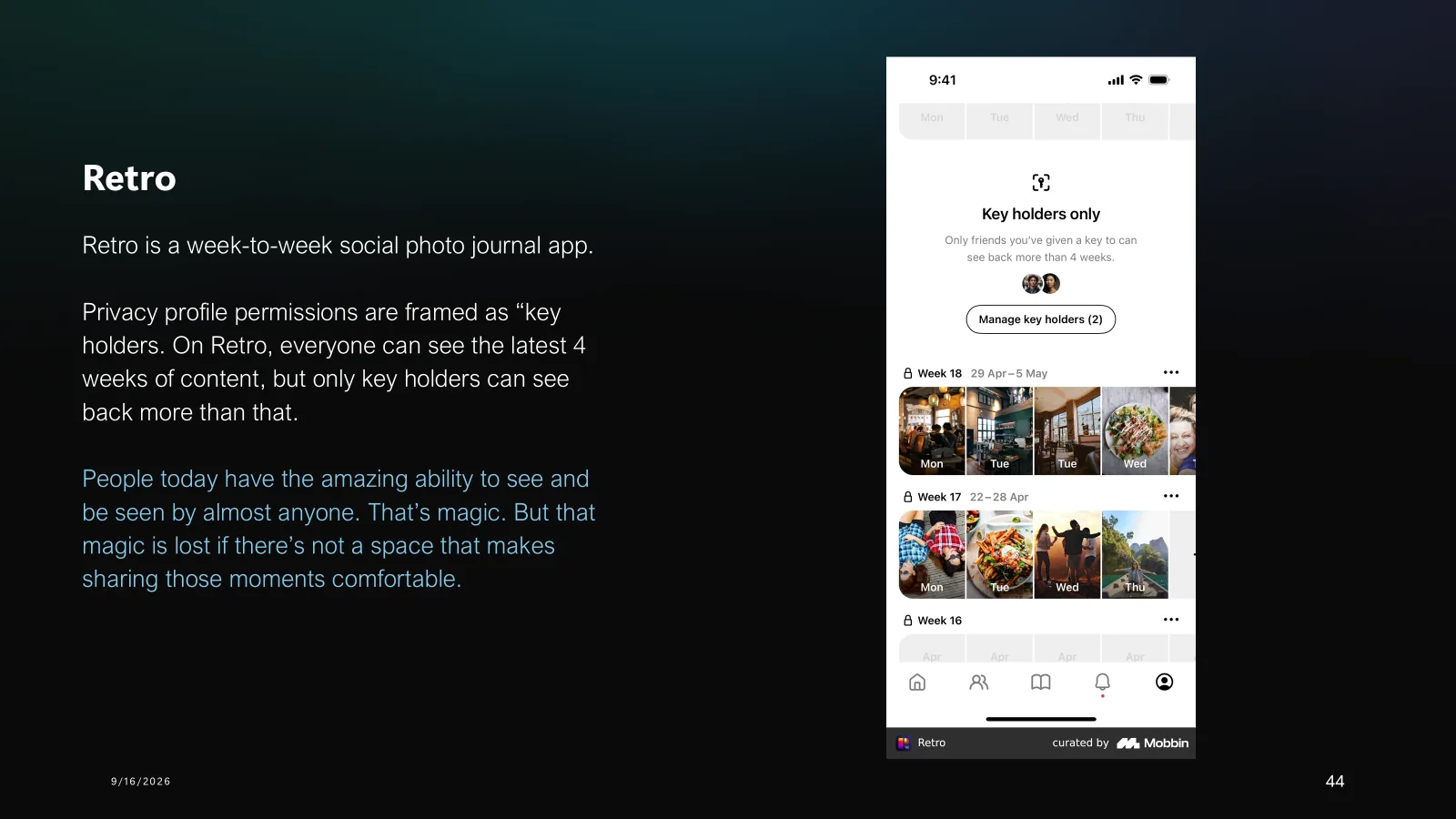
Competitive work pointed at the same gaps Xbox hadn't closed: player-owned showcases (Steam), expressive status (Discord), simple privacy templates (PlayStation), and activation that gets someone to a first "this is mine" moment (Instagram).
Approach
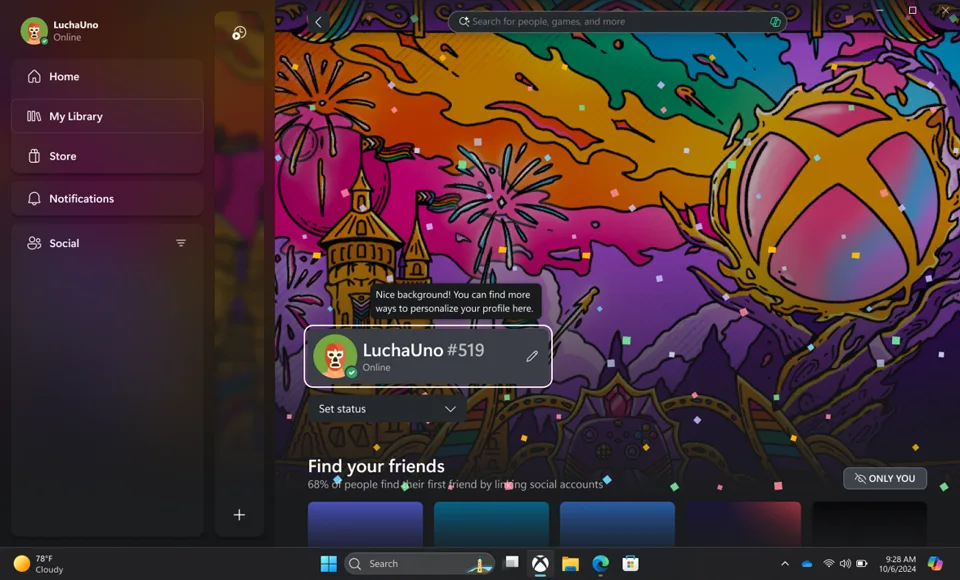
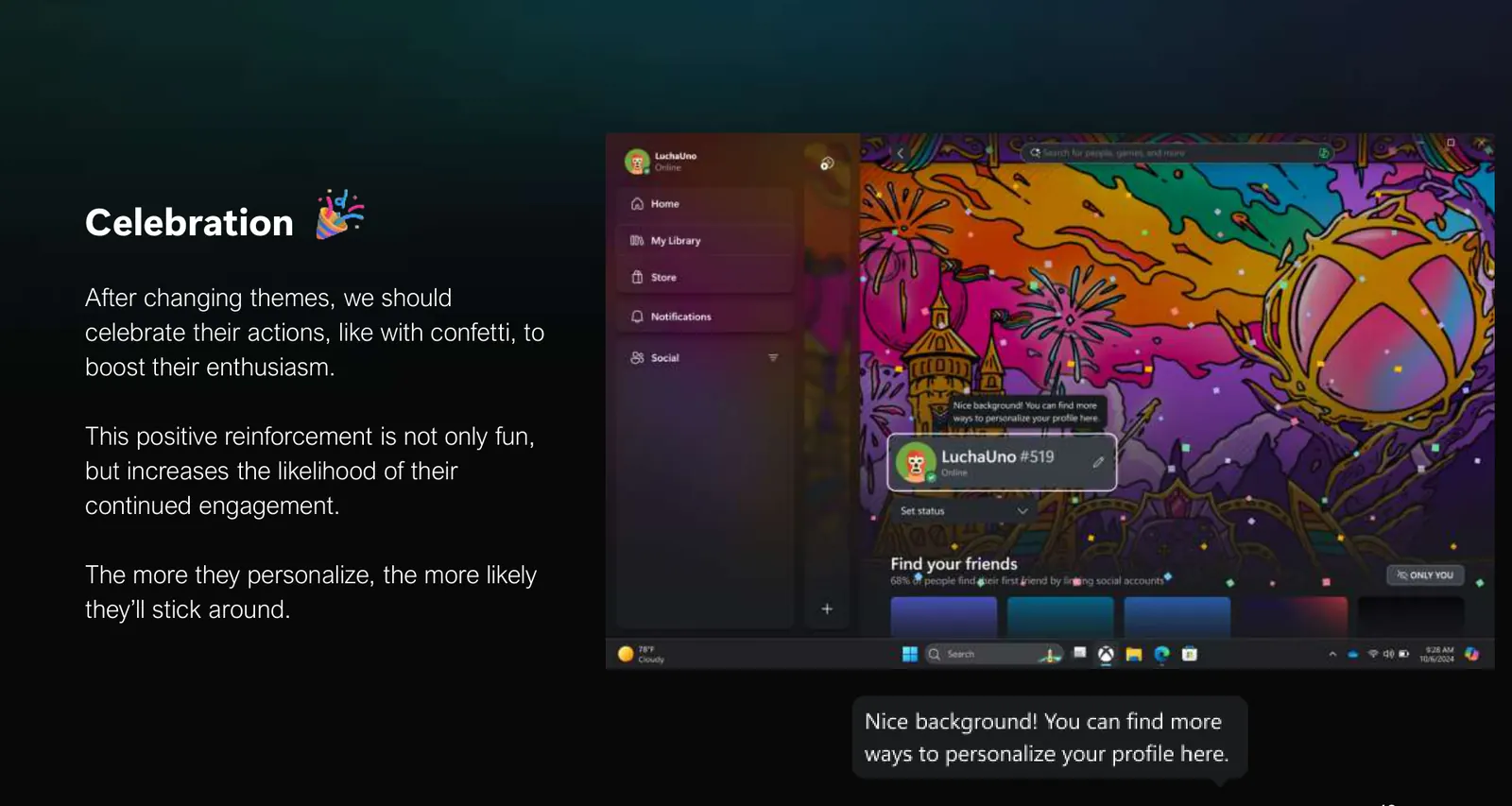
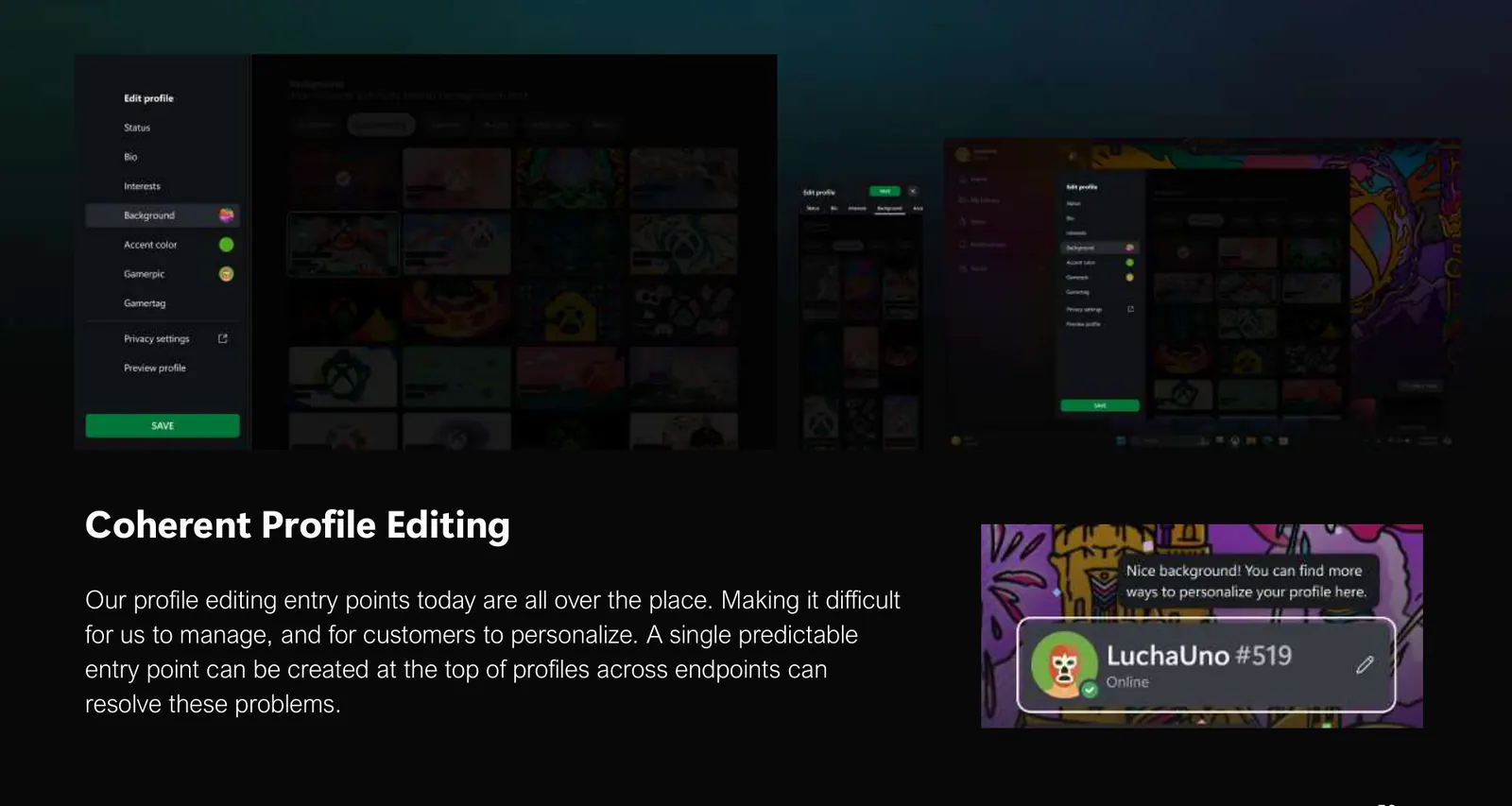
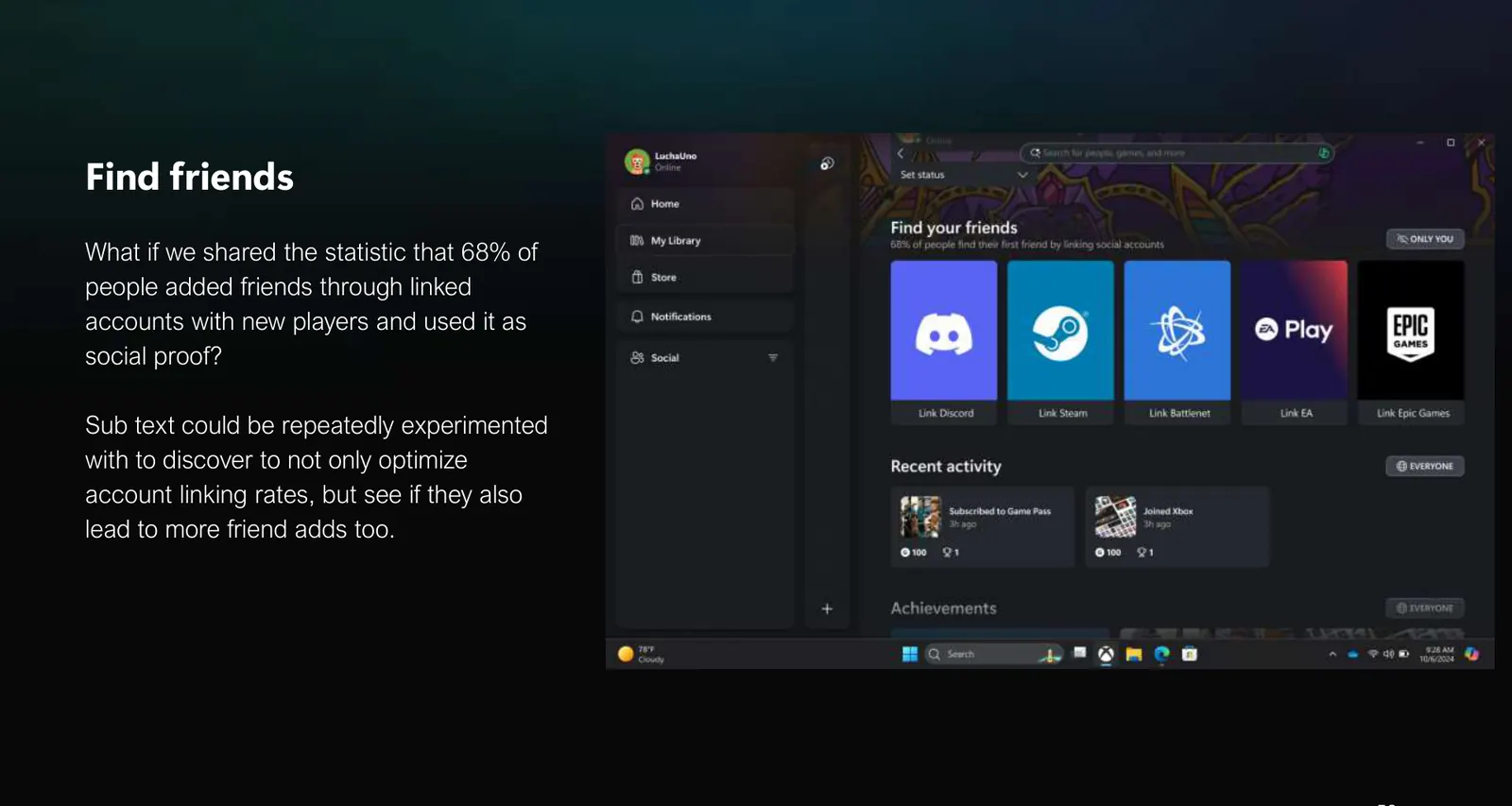
Start with new players. One-tap theme, celebrate the first change, then a single edit entry at the top of profile on every surface. Theme previews that actually look like the profile — not a tiny icon. Social proof that 68% of people find their first friend by linking accounts sits on the same surface, so identity and connecting aren't two products.
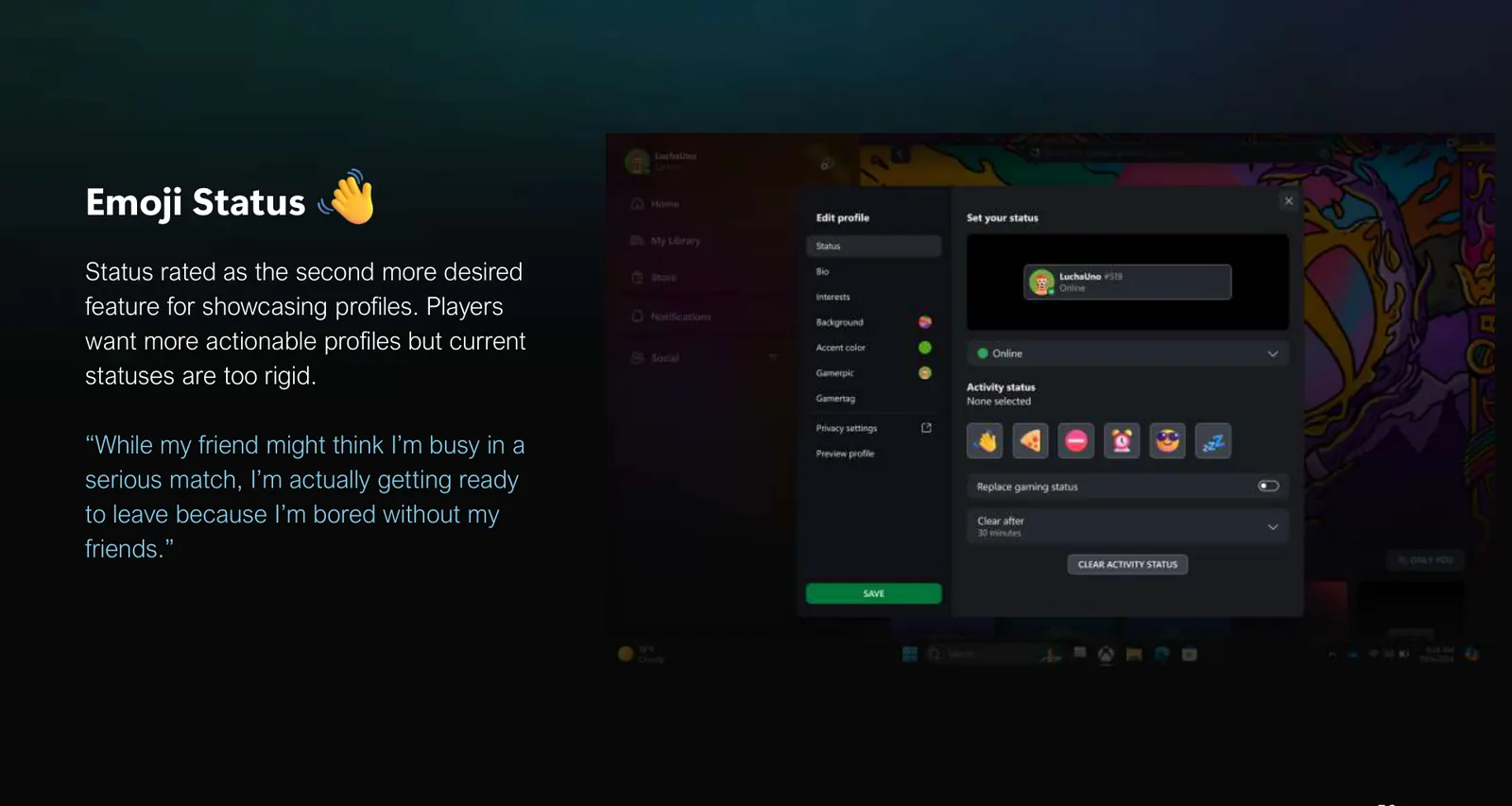
Status rated as the second thing players wanted to showcase, but today's statuses are too rigid. Emoji status lets "online in a match" also mean "I'm bored, come play" or "don't bother me" — a small, vetted set under the gamertag, on profile and in the guide. Bios get examples, placeholder text, and Copilot that drafts from play history so writing about yourself doesn't feel like a job application.
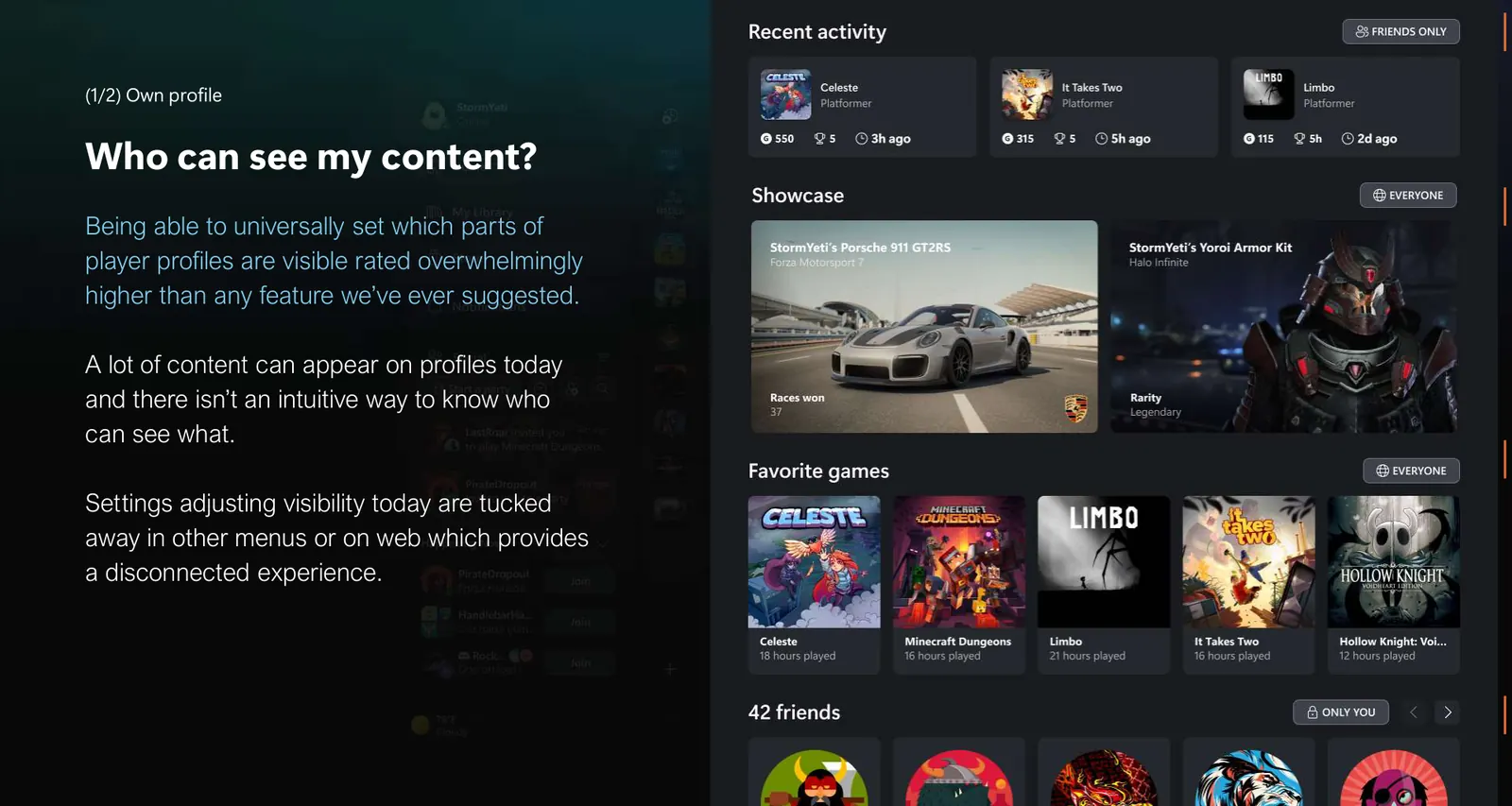
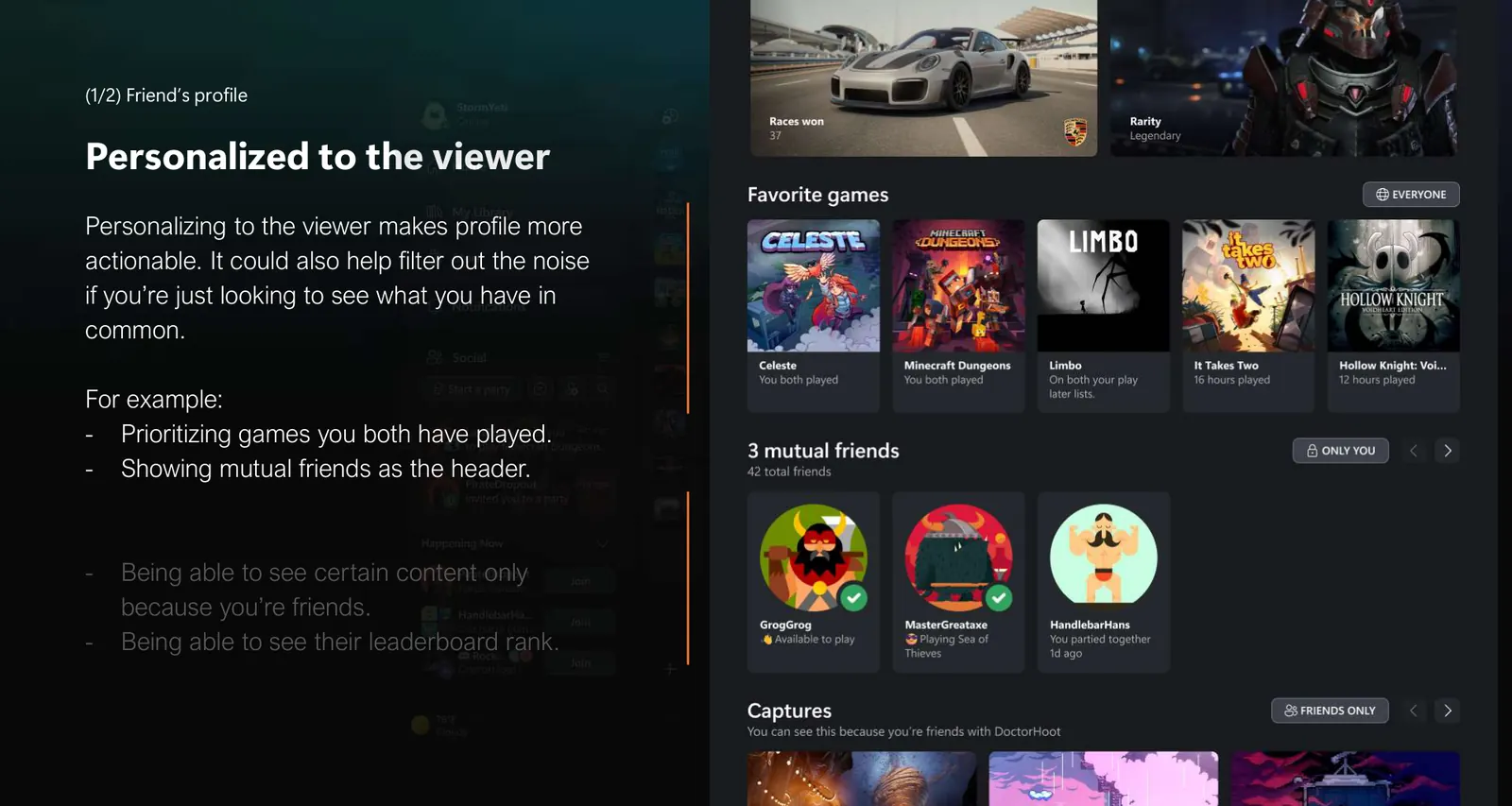
For everyone else: section-level visibility you can understand (who sees games, friends, captures), inventory showcases — the car, the armor, the skin, not just box art — and a friend view that leads with what you have in common. If you aren't friends, you still see exactly what that person wants you to see.
Impact
The north star cleared. Identity, personalization, and friend-finding stopped planning as one-offs per device. Subsequent cycles build toward activation that gets a new player to "this is mine," a single edit entry on every surface, visibility you can understand, and a profile that changes based on who's looking.
What that unlocked: a shared destination for friend adds, invites, and parties that start from profile; time-to-first-friend for new players; and personalization that actually gets used.
Teams are shipping against that proposal — so expressing yourself and finding people to play with aren't different products on different screens.